Context
As a class assignment, my group designed an information architecture for a fictional client website, Travel Baby, based on card sorting with representational users and designer analysis. We generated a video summary of our findings and process as well as a more formal report. Both the video and report can be found below.
Video Summary: Travel Baby
Report: Travel Baby – A baby travel information website
We propose the following information architecture concept for Travel Baby, an information website for parents/ primary caregivers or baby sitters who travel with a baby. We recruited primary caregivers, baby sitters, and individuals who will care for children in the future to better understand how prospective site visitors would forage for information. Our study participants engaged in a card sort activity. They sorted, grouped, organized, and labeled site content words. Our proposed Travel Baby information architecture is based on our analysis of the participants’ card sorting results. Travel Baby is intended to be easily navigable for busy, over-tried, and stressed-out baby care-givers. We believe our site architecture plan will help any parent or caregiver plan a great, hassle-free and stress-free trip to focus on having a fun and memorable travel experience with their baby!
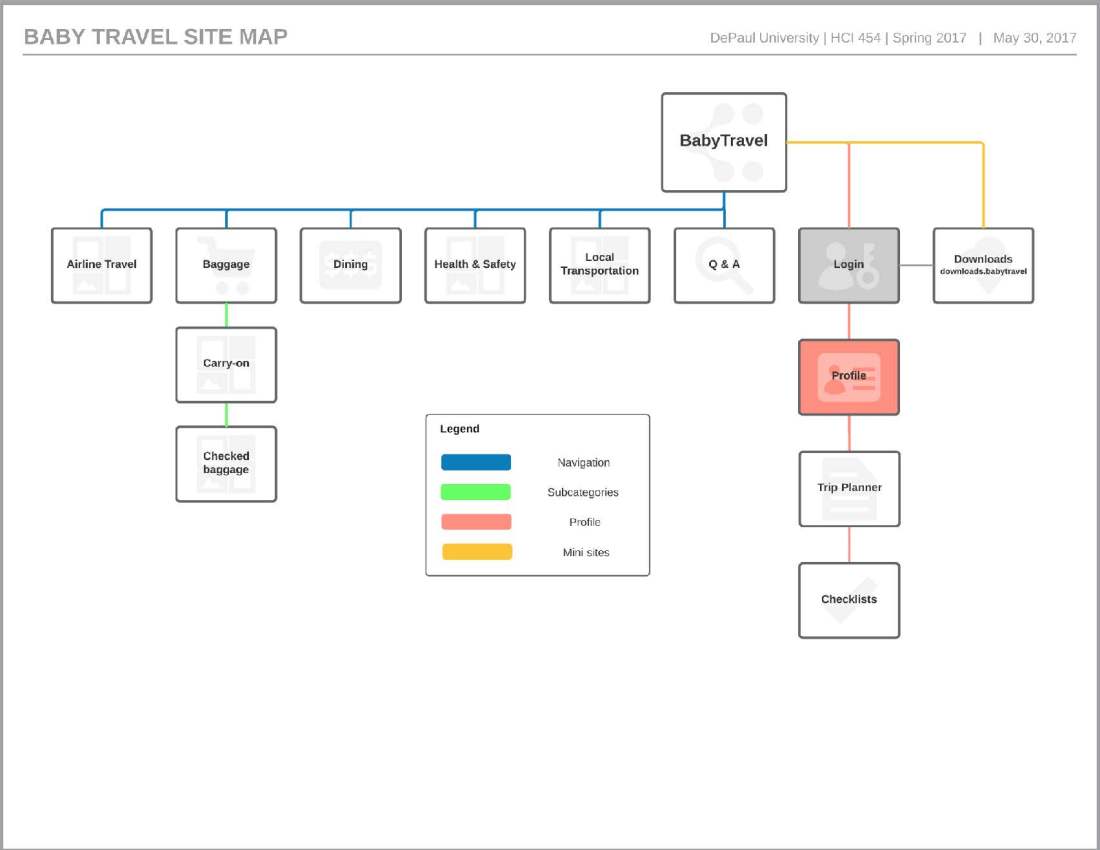
This site map is a high-level overview of the proposed information architecture for Travel Baby. Six pages represent the global navigation scheme for the site: Airline Travel, Baggage, Dining, Health and Safety, Local Transportation, and Q and A. These six pages are based on the average number of groups created in the card sort. The Baggage navigation includes two possible subcategories. Navigation labels are tentative. Current labels are based on group name labels provided by our card sort participants, but further content analysis is needed.
The proposed Login scheme shows possible site personalization options. Login personalization might include an account profile, personal checklist, and downloads. Account profiles can also be used to gather information about the user base and a potential source for generating revenue. The Downloads page is shown as a mini-site and is available from the main page so it can also be accessed without the benefit of logging in.
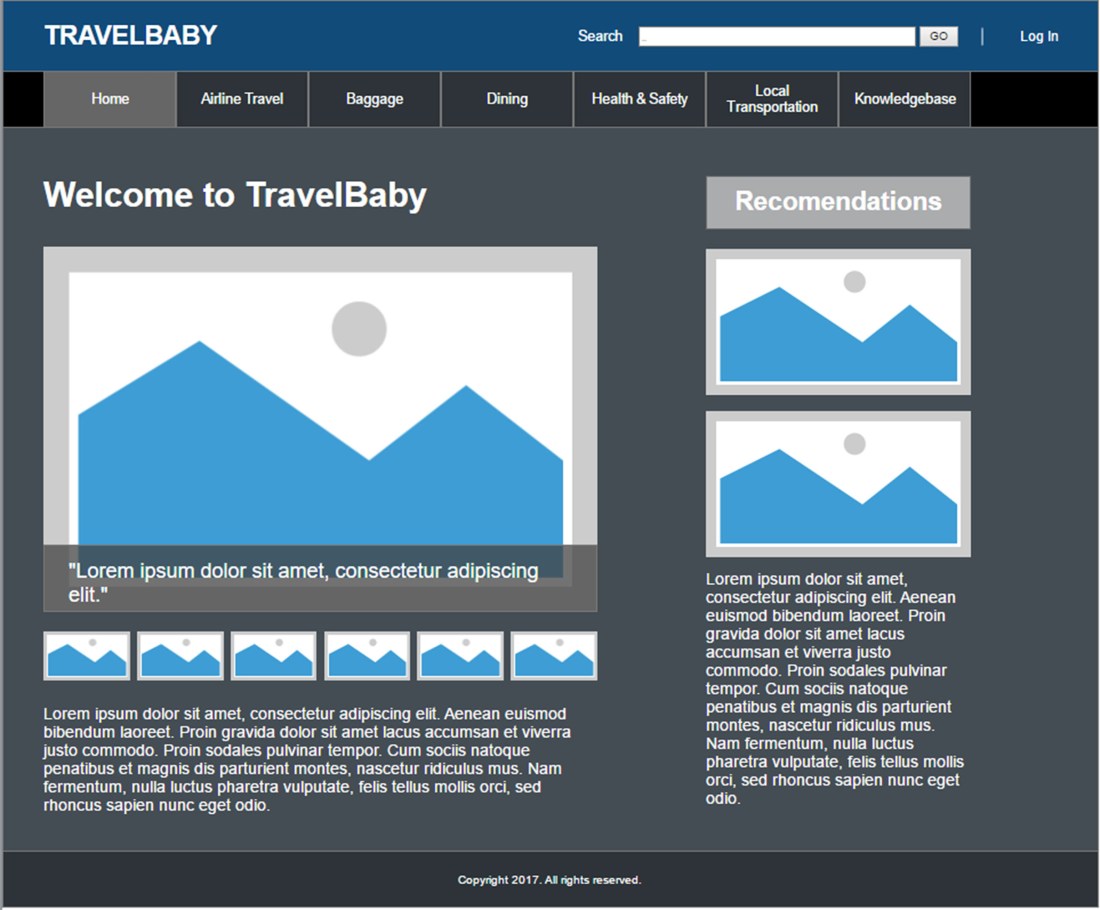
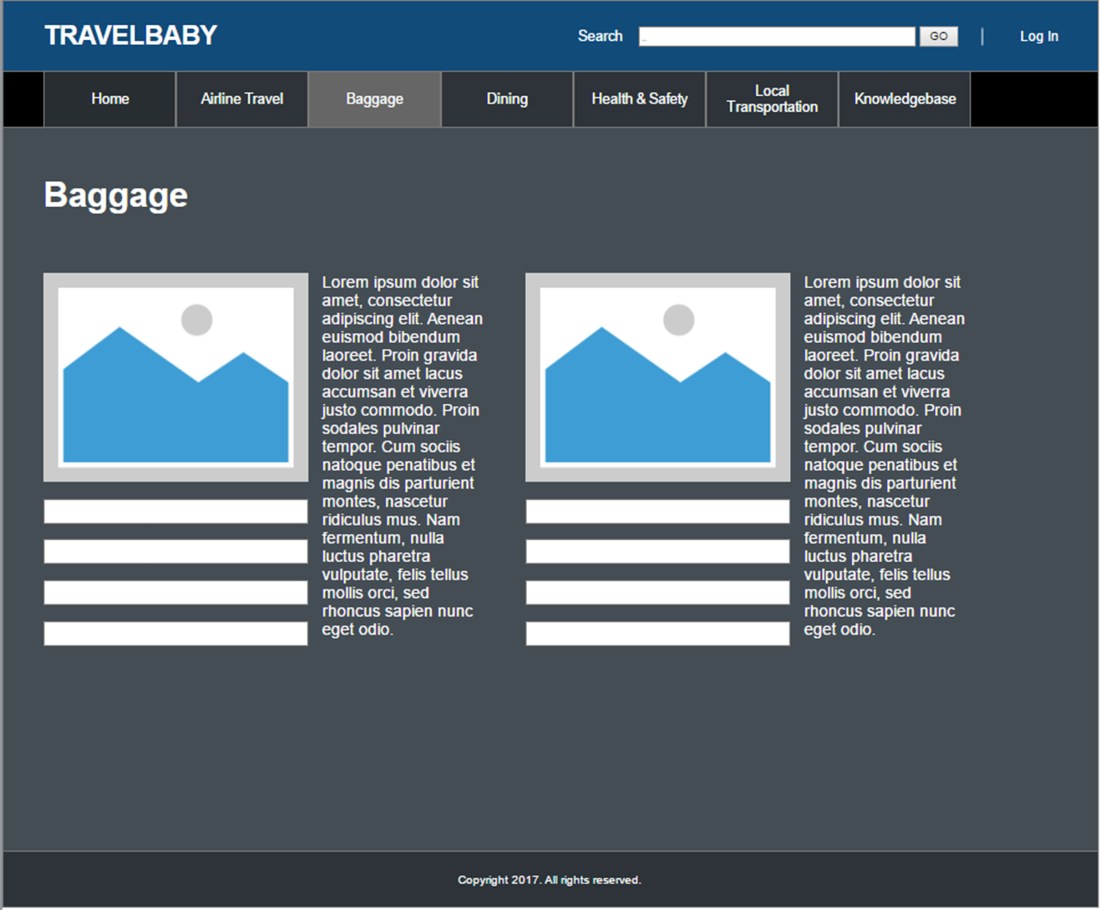
Wireframes – Desktop
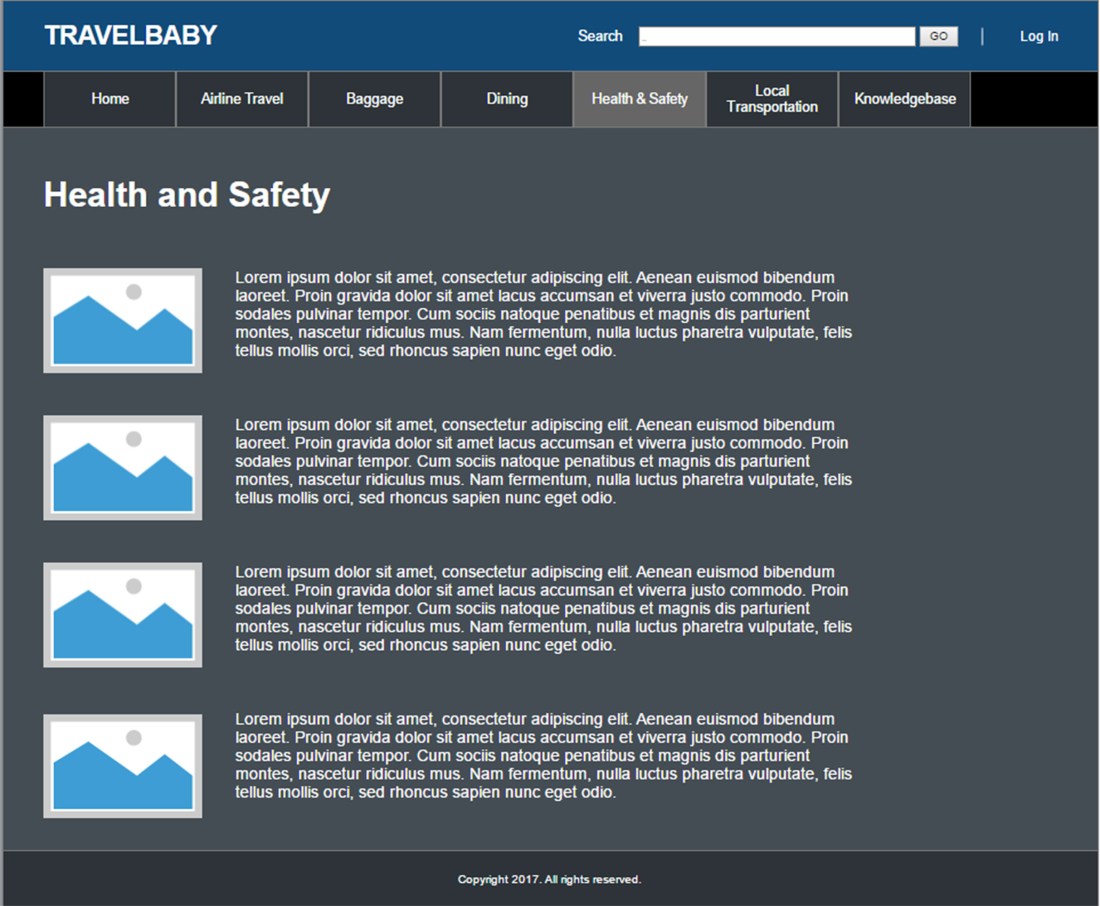
Wireframes – Mobile


Design Process: Card Sorting Method Summary
We conducted an Online remote open card sort with representative users through Optimal Workshop. The goal of the card sorting exercise was to better understand how potential site visitors would anticipate information organization on a baby travel information website. The open card sort included 56 content item cards (see appendix Exhibit A in full report PDF) previously brainstormed by our design team. We chose to conduct an open card sort to also investigate what category labels potential users might use to refer to groups of content items. We hoped to develop ideas for how label content on our website in addition to insight into structure.
We snowball recruited 13 participants who had or who were currently caring for a baby/toddler as either primary caregivers or as baby sitters. We included participants who anticipated acting as a primary caregiver or baby sitter in the future. We screened the participants with the following question:
Have you cared for a baby/toddler (primary caregiver or baby sitter) or do you anticipate you will care for a baby/toddler in the future?
Yes – I have cared for a baby/toddler or anticipate I will care for one in the future N
No – I have not cared for a baby/toddler and do not anticipate caring for
A post study question was included to gain possible insight into participants’ thinking about their category groups and their mental model about the domain terms (see appendix Exhibit F in full report PDF for participant responses):
Please describe how you sorted the cards into your categories.
Design Process: Card Sorting Results Analysis and IA Design
Our design team conducted individual card sorting results analysis. These individual analyses were then formulated into four unique design proposals. (see appendix Exhibits: B, C, D, E in full report PDF) The design team then worked to synthesis the individual proposals into one optimal information architecture proposal.
The resulting information architecture (IA) proposal is based on the following areas of agreement/similarity among the individual designs:
- Proposed designs contained approximately six (6) global navigation elements. Designers noted participants typically cards into an average of six (6) groups.
- Air travel, medical, baggage/packing, and some element of “planning” were integrated into the global navigation across the designs. Most designers gleaned these content groupings from the card sort groupings created by participants are the strength of associative relationships between content items in the card sort results. However, some designers believed these items should be included regardless of card sort results given the domain requirements.
There were some structural/conceptual differences among individual designs that were addressed by the design team; the resulting IA proposal is also based on the following design choices:
- Some designs emphasized baggage/packing in terms of the items to be packed while others conceptualized this area as mainly focused on the logistics of baggage itself. The proposed site conceptualizes this content area in terms of the logistics of baggage with additional functionality available to create packing lists as part of login personalization. The participant data showed well defined luggage and packing item groups; but the card sort exercise alone does not define “how” a potential user might plan a trip. User interviews and possible testing with defined tasks may be needed to further understand this area.
- Some designs narrowly defined “planning” in a specific baby-centric concept whereas others more broadly conceptualized “planning” in terms of general travel. The proposed design conceptualizes the content involved in planning as part of a knowledge base. This decision is based off of group discussions and the design featured in exhibit B which was inspired by a card sort participant category for this area.
- All proposed designs included some consideration for dining and local transportation; however, some designs included these areas within the global navigation while others included these areas as secondary items among other global items. The proposed design includes dining and local transportation as global items based on the design team’s determination that the content groups were clearly defined in card sort results enough to be considered global navigational items.
 Mary Jo Zefeldt